How a marble block is transformed: from quarry to finished product
Before being installed in a project, marble goes through several transformation stages. Starting from a raw block extracted from the quarry, professionals carry out precise work to obtain a finished product ready for use.
Indeed, each stage plays an important role in the quality of the material. Thus, specialized companies use appropriate techniques to cut, shape, and polish the stone.
This process makes it possible to obtain durable, aesthetic marble that is perfectly suited to architectural projects.
Marble extraction
The transformation of marble begins in quarries. Professionals use suitable machines to extract large stone blocks.
For example, they use specific tools to separate marble from the rock. Thus, they obtain blocks that are then transported to processing workshops.
Cutting the blocks
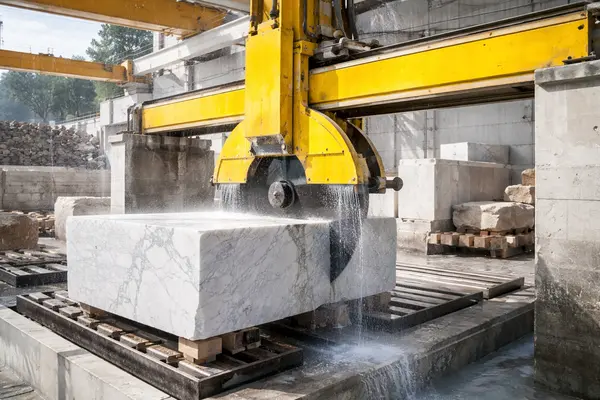
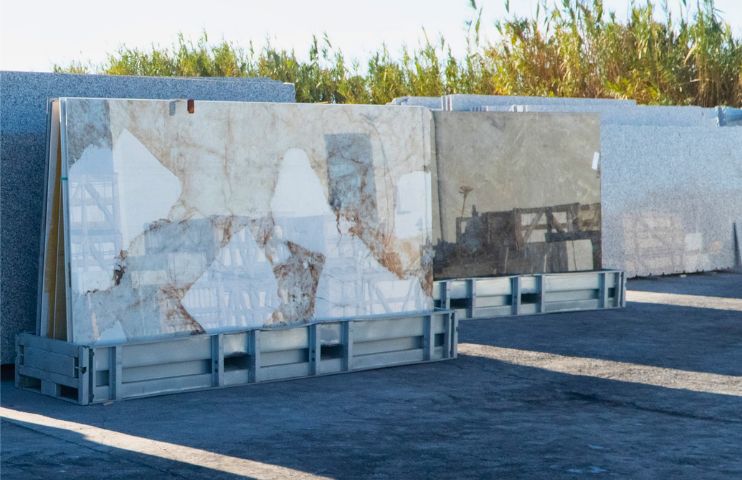
After extraction, professionals move on to the cutting stage. They cut marble blocks into slabs or tiles of different thicknesses.
Indeed, this step makes it possible to obtain surfaces adapted to projects. In addition, modern machines ensure precise and regular cutting.